How I helped bring Carbon and Source together into one connected product experience by unifying architecture, workflows, and design patterns.
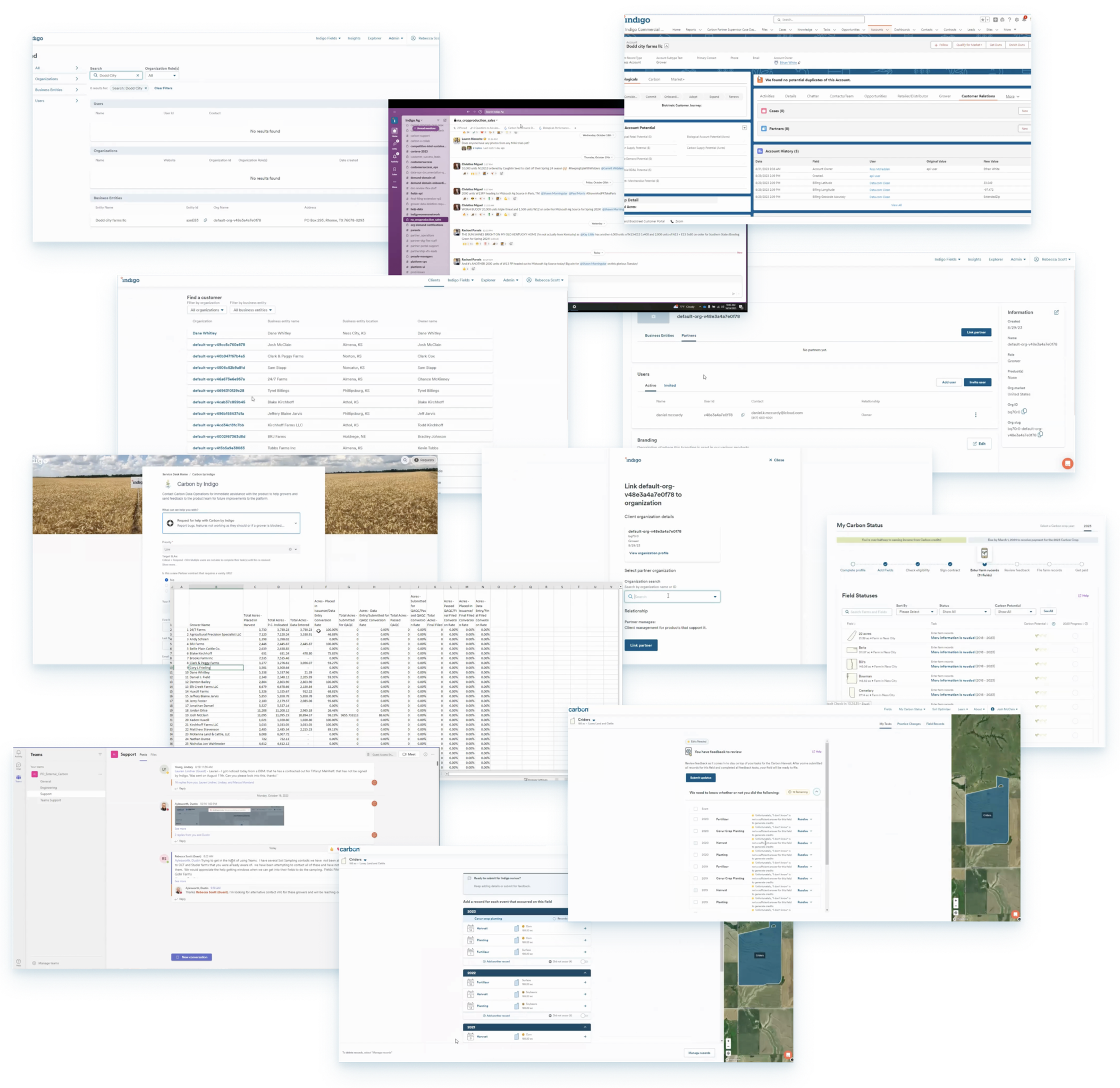
Carbon and Source had been built as separate product experiences, creating a platform that felt fragmented for growers, partners, and the team building it. I helped define a unified direction — aligning architecture, workflows, relationship management, and design patterns into one shared platform model that could scale across programs over time.
Platform architecture
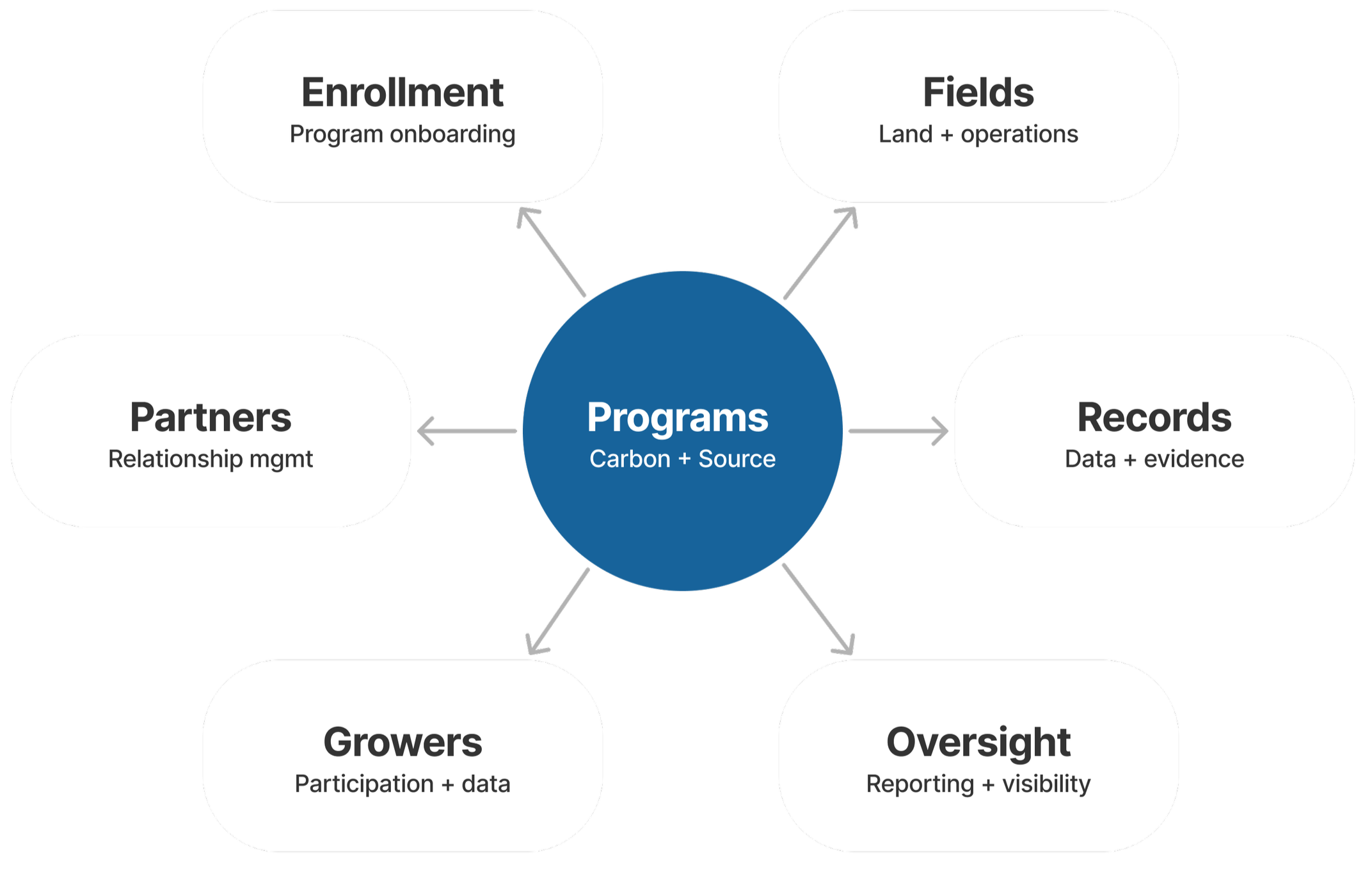
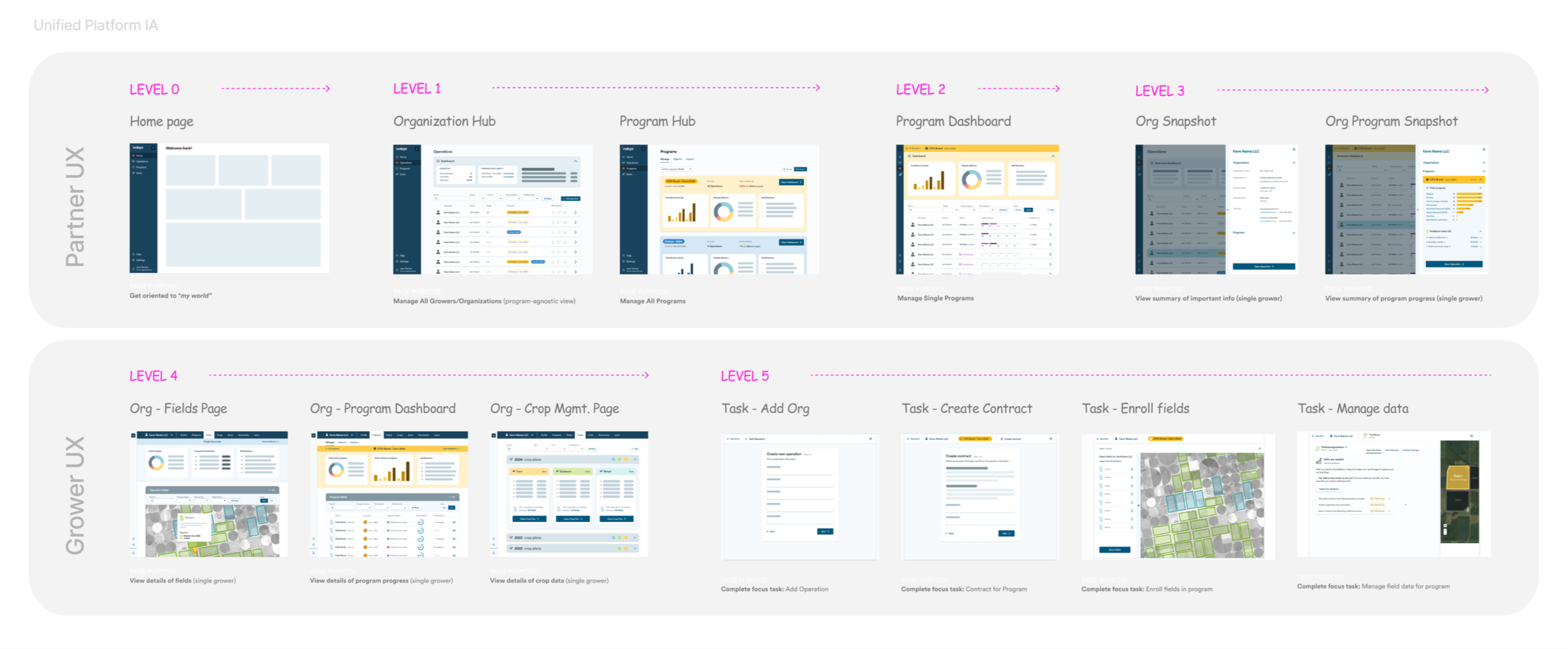
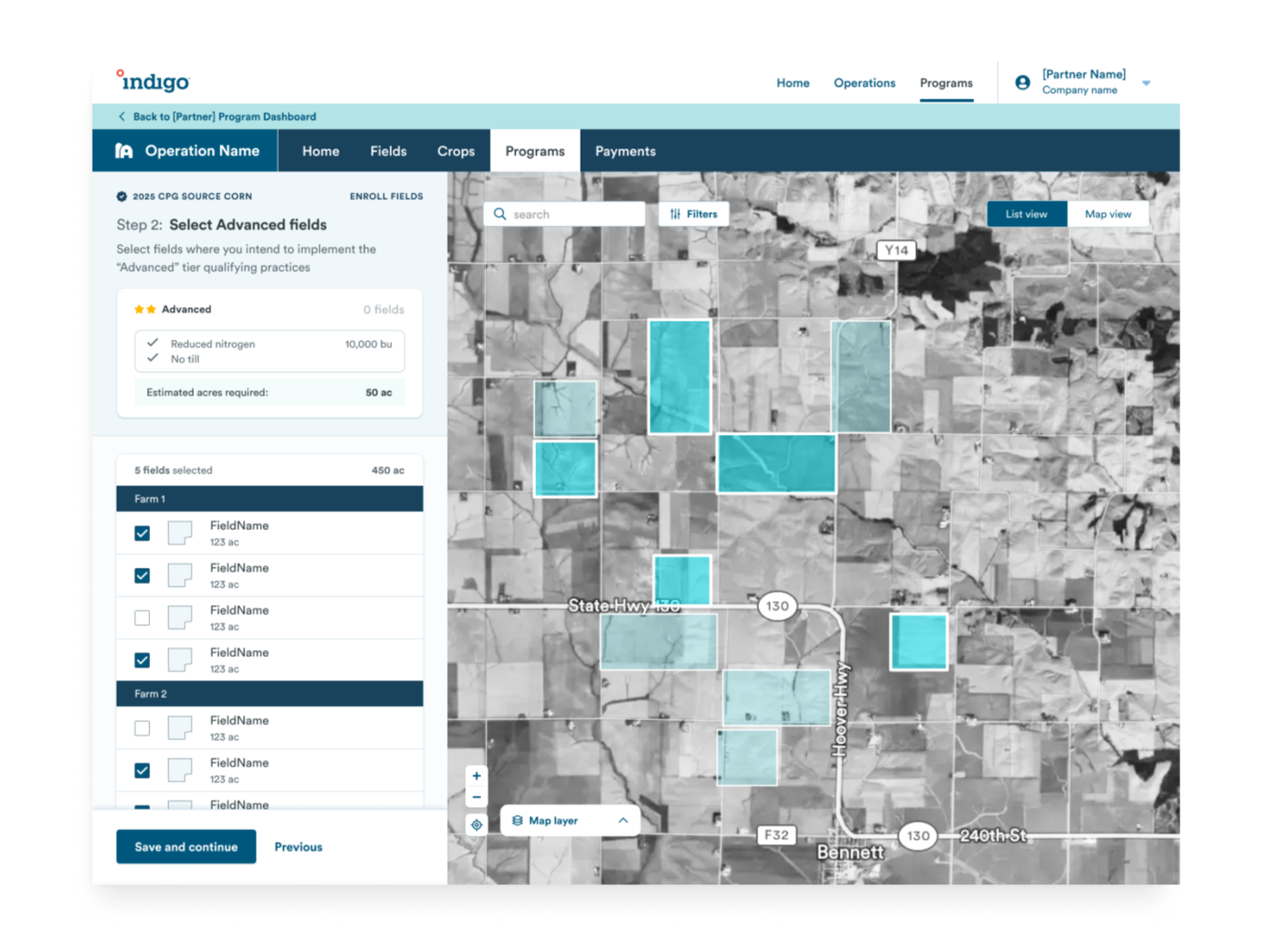
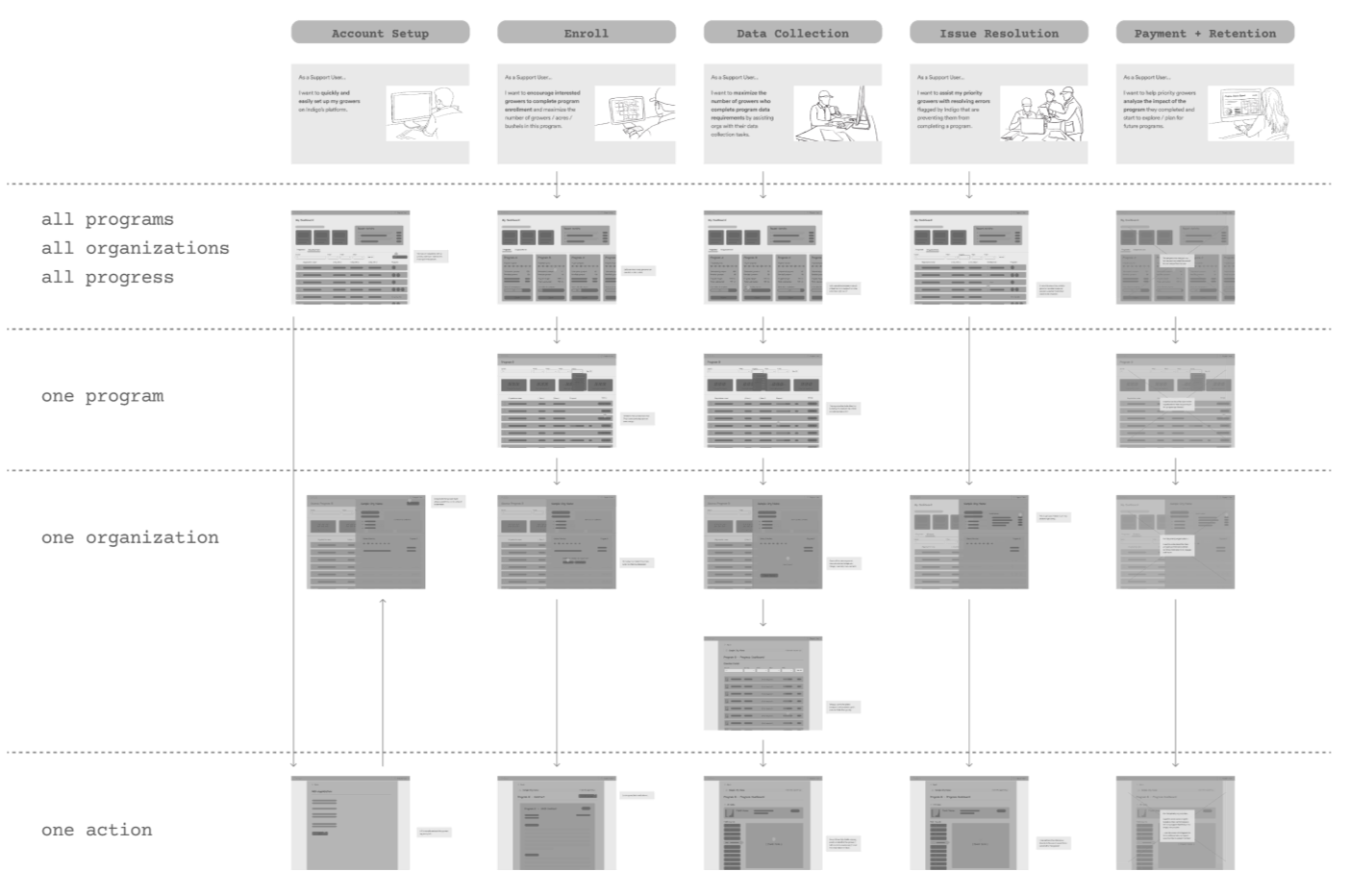
Unified IA spanning programs, enrollment, partners, growers, and fields — one structure supporting both Carbon and Source.
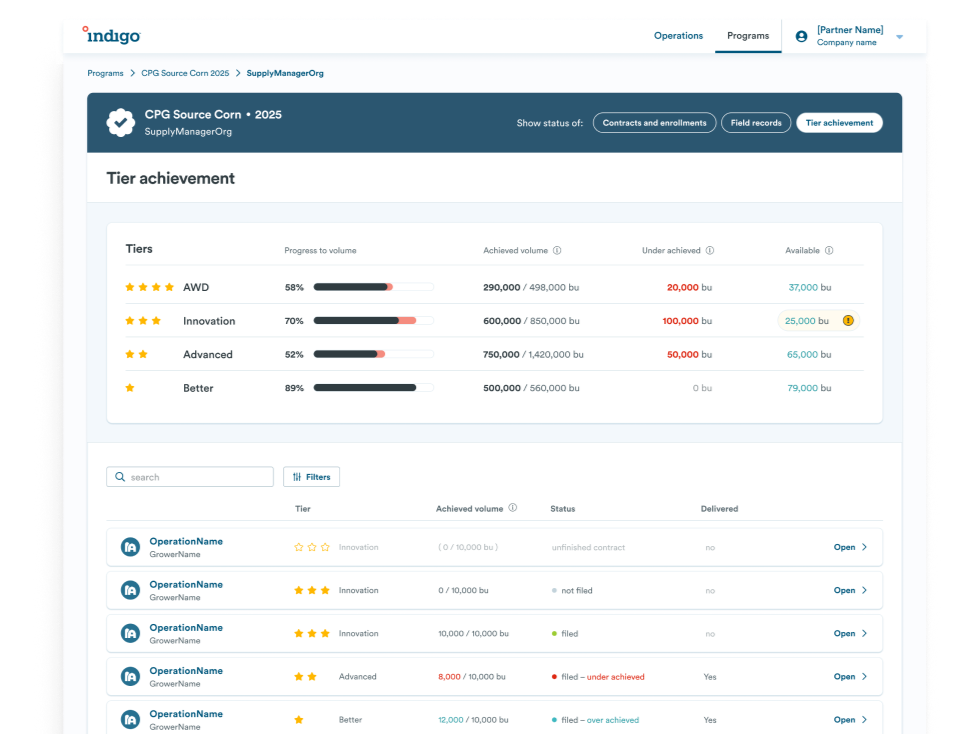
Partner oversight dashboard
Standardized management view giving partners visibility into grower participation, status, and next actions across programs.
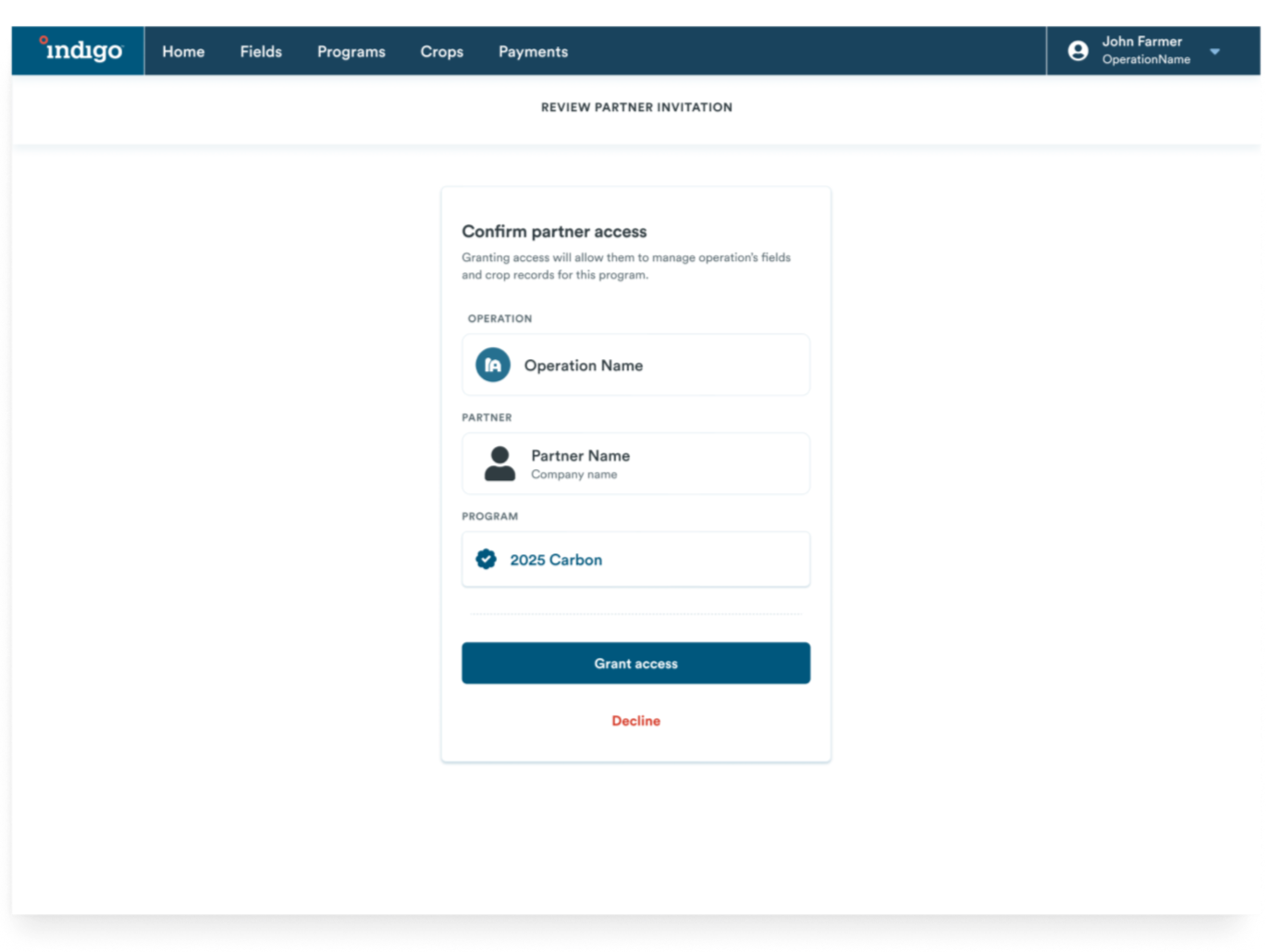
Relationship management and invitations
Consolidated user types and invitation flows into a single framework — consistent behavior across programs and user types.
Reusable page structures
Shared layouts and interaction patterns applied consistently across product areas and programs, reducing duplication across the platform.
The problem wasn't inconsistent screens. It was inconsistent system logic underneath them.
Carbon and Source had grown through separate initiatives without a shared model for how programs, operations, relationships, and oversight should work together. That reframe shifted the work from optimizing isolated flows to defining the shared structure beneath the experience.
Rather than fixing surface-level inconsistencies, the work focused on defining shared structure: unified platform architecture spanning programs, enrollment, partners, growers, and fields — with standardized relationship management, consistent oversight patterns, and reusable page structures shared across both Carbon and Source.