CARBON DATA COLLECTION

From Field-by-Field Data Entry to Crop-Oriented Program Execution

How I helped rebuild the foundation of Indigo's carbon platform around real-world farm management, reducing operational burden and unlocking scale.


Senior Product Designer

Sole designer during execution

ROLE

CONTEXT

SCOPE

Research, systems design,
product architecture

TEAM

PM, engineering, CS, policy
& science

01 – OVERVIEW

What looked like a workflow problem was actually a structural one.

Indigo's carbon platform required growers and partners to submit complex, multi-year agricultural data across enrolled fields. The experience was fragmented, repetitive, and heavily dependent on support to complete.

The platform was built around a field-first data model that didn't reflect how growers actually manage their land. I helped lead the research and redesign that reoriented the platform around Crop Plans as the core unit of work, reducing duplication, improving issue resolution, and creating a more scalable foundation for program execution.

02 – THE CHALLENGE

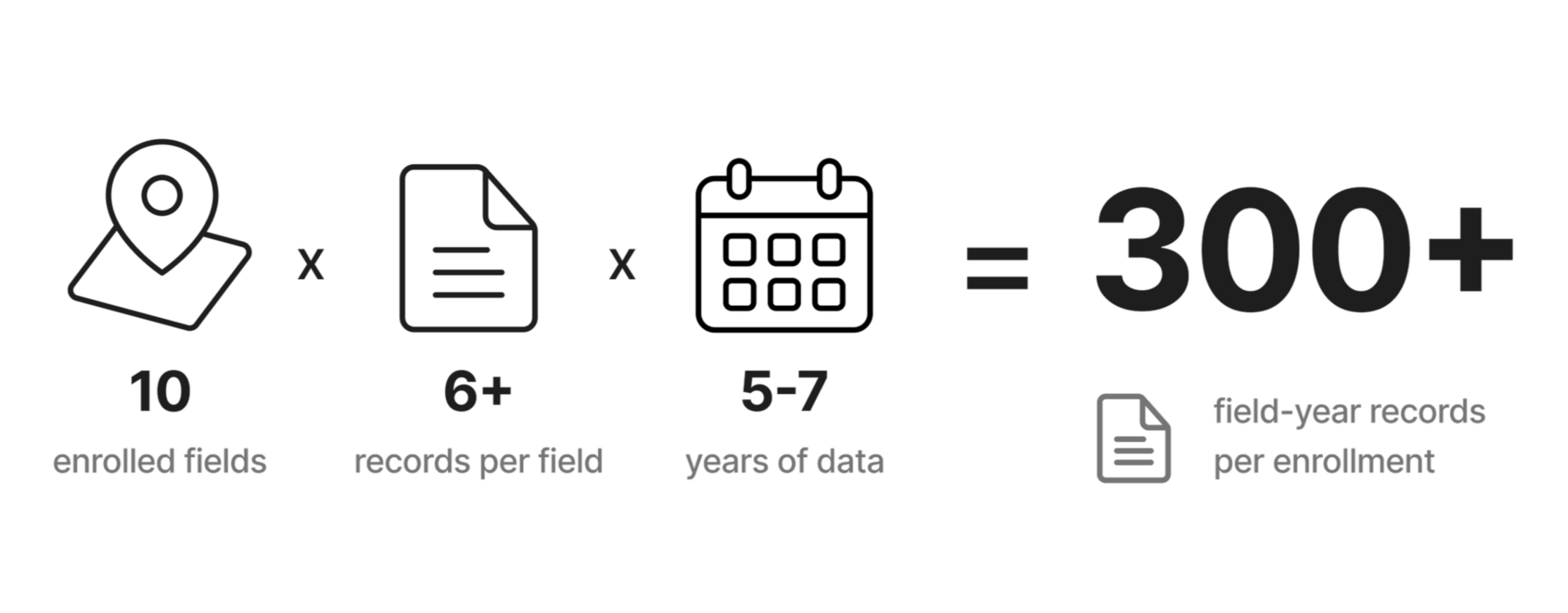
Even small enrollments could balloon into dozens of repetitive records.

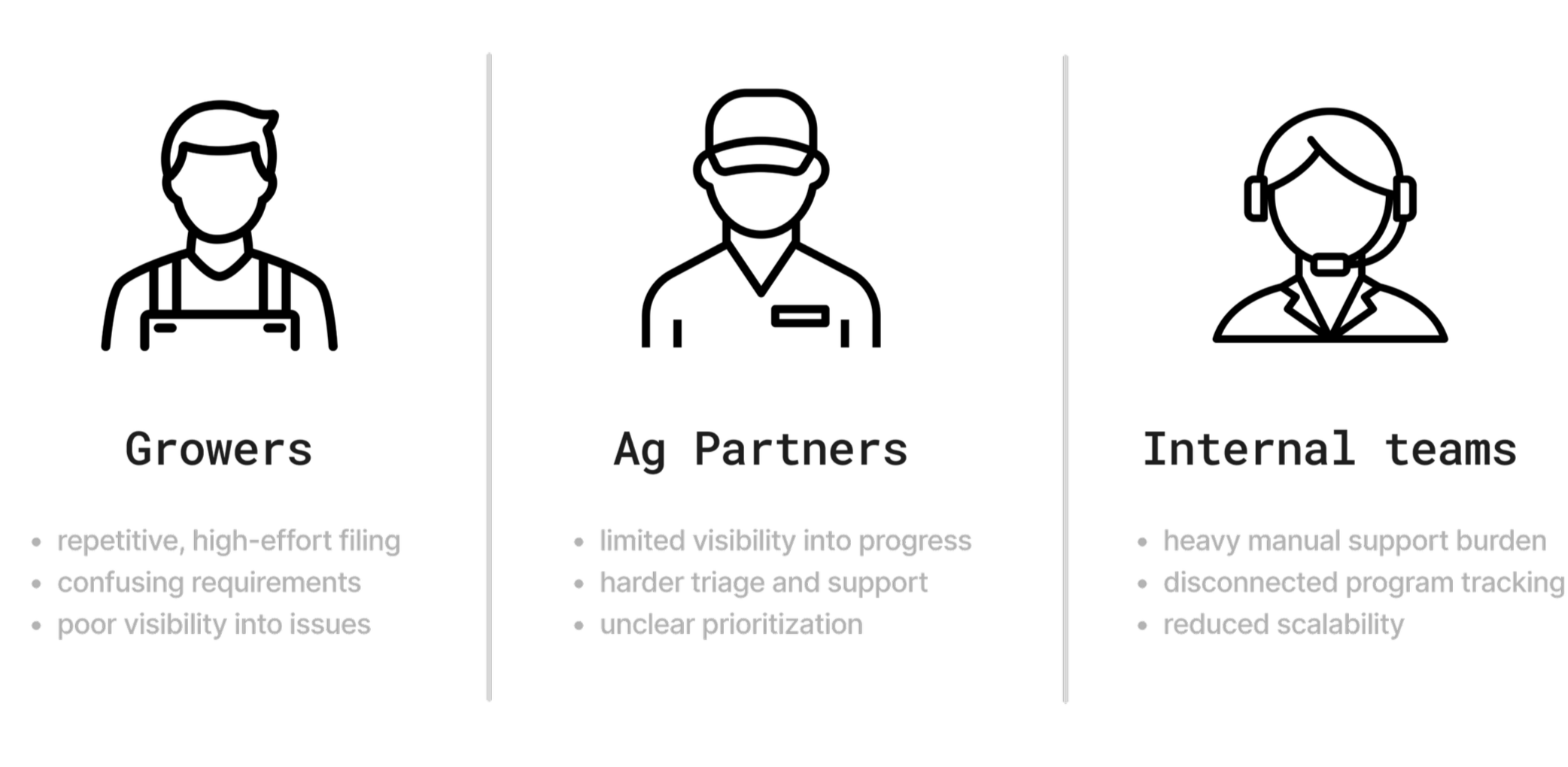
Growers faced confusing requirements and unclear error states. Partners had limited visibility into progress. Internal teams spent significant time manually supporting users through filing.

The problem wasn't isolated to one part of the experience. It ran across the entire ecosystem: growers, partners, and internal support teams were all absorbing the cost of a fundamentally misaligned data model.


03 – THE INSIGHT

Growers don't think in isolated field records. They think in terms of crop management across groups of fields over a season.

That shift in perspective changed the design question entirely: not "how do we improve field-by-field data entry?" but "what would this platform look like if it were built around real-world farm management?" Everything that followed flowed from that.

04 – THE SOLUTION

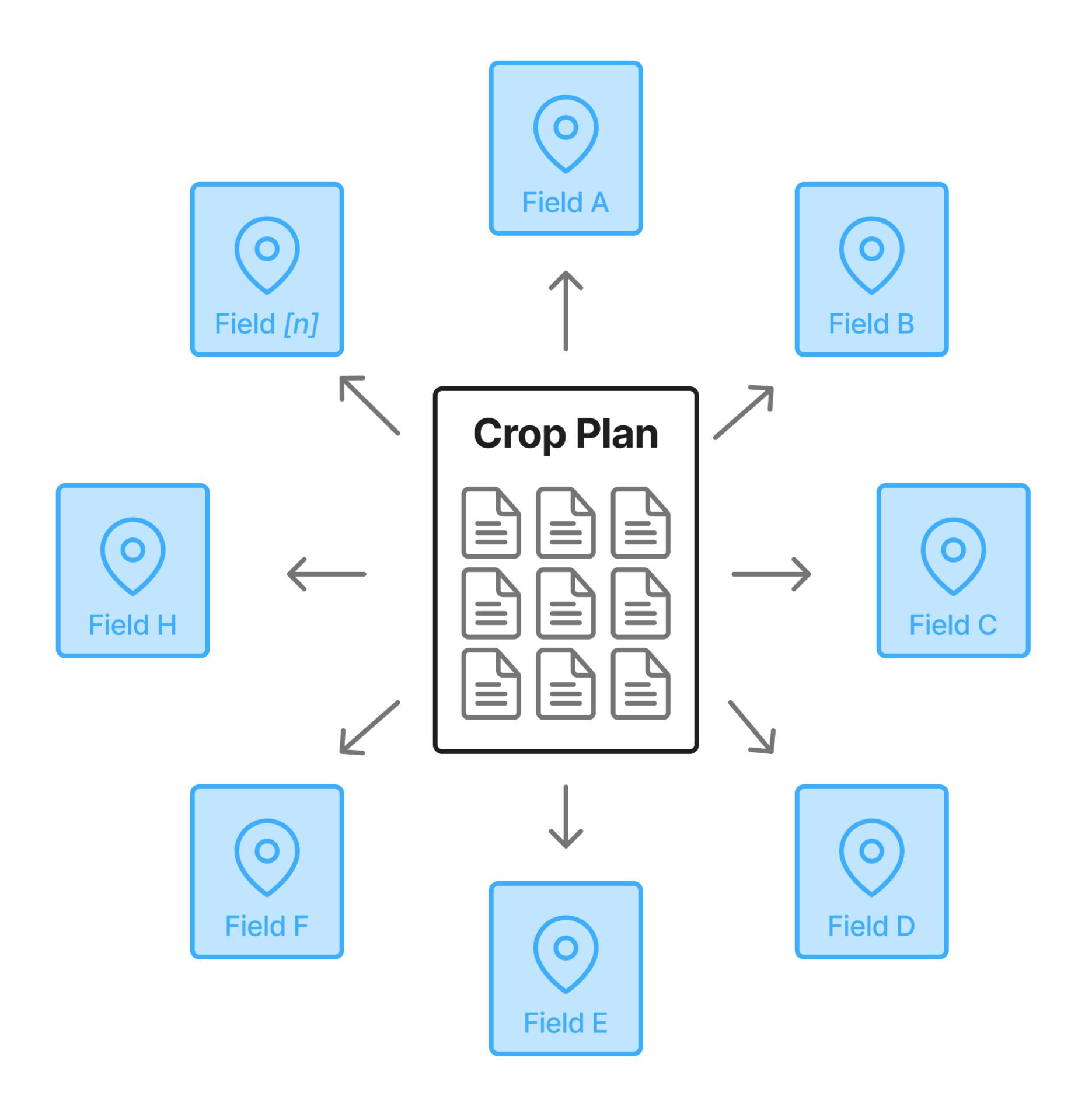
Project Lightning rebuilt the platform around Crop Plans as the primary unit of work.

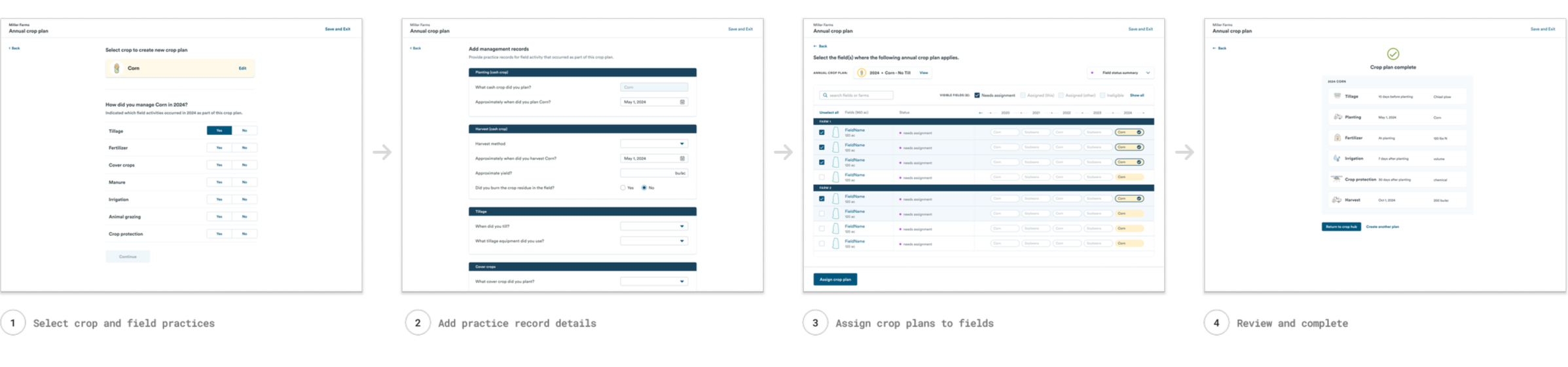
Instead of recreating nearly identical records field by field, users could create a crop-level plan once, assign it across relevant fields, and manage records more centrally.

Supporting improvements to dashboard structure, navigation, and progress visibility helped turn the redesign from a workflow fix into a more scalable program execution foundation.

04 – PRODUCT

Key screens from the new experience.

Crop Plan creation wizardThe core new flow: create a crop-level plan once, then assign across fields. Replaced dozens of repetitive field-year records.


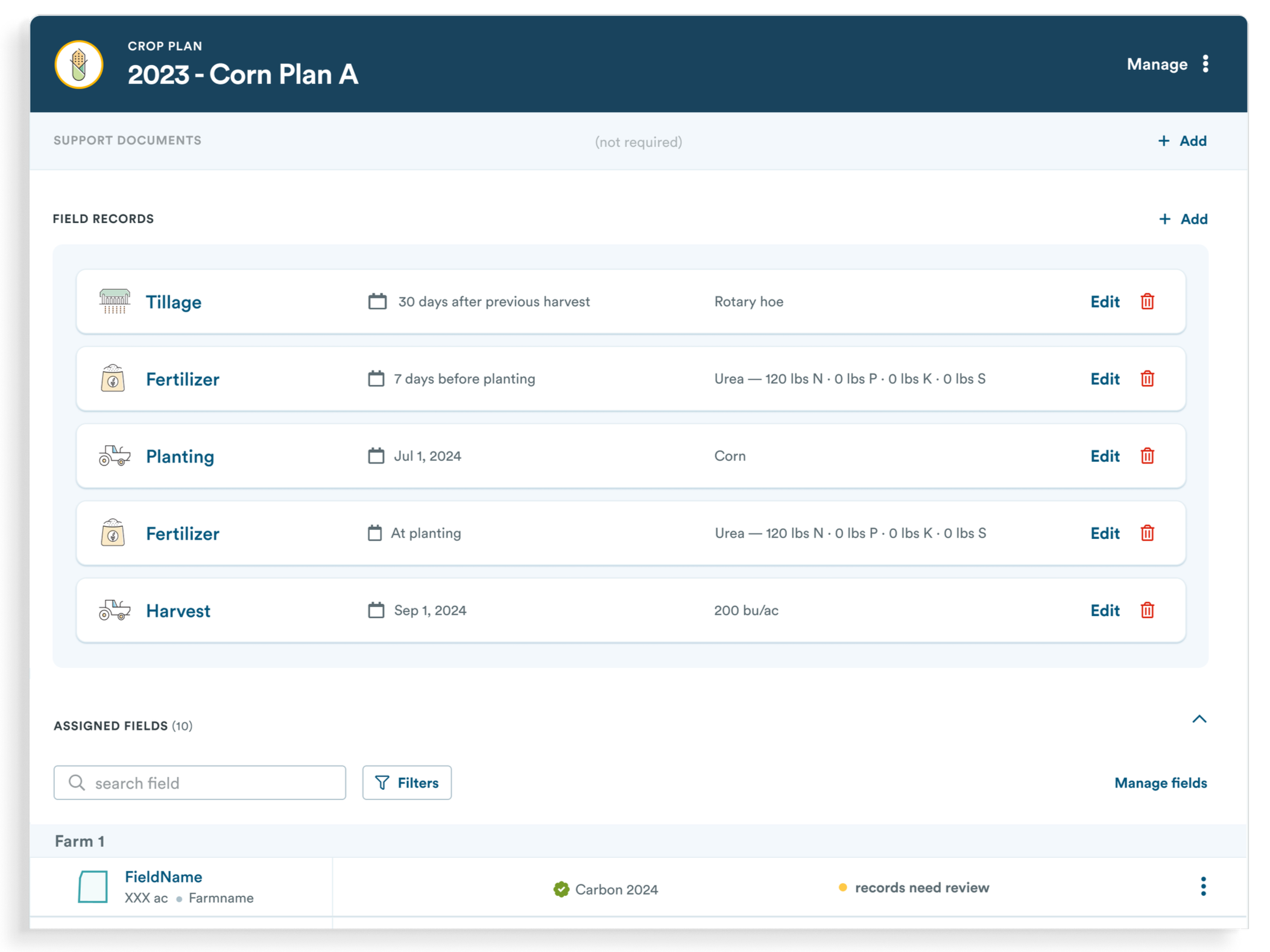
Crop Plan management

Centralized view of all records across assigned
fields with consolidated issue management.


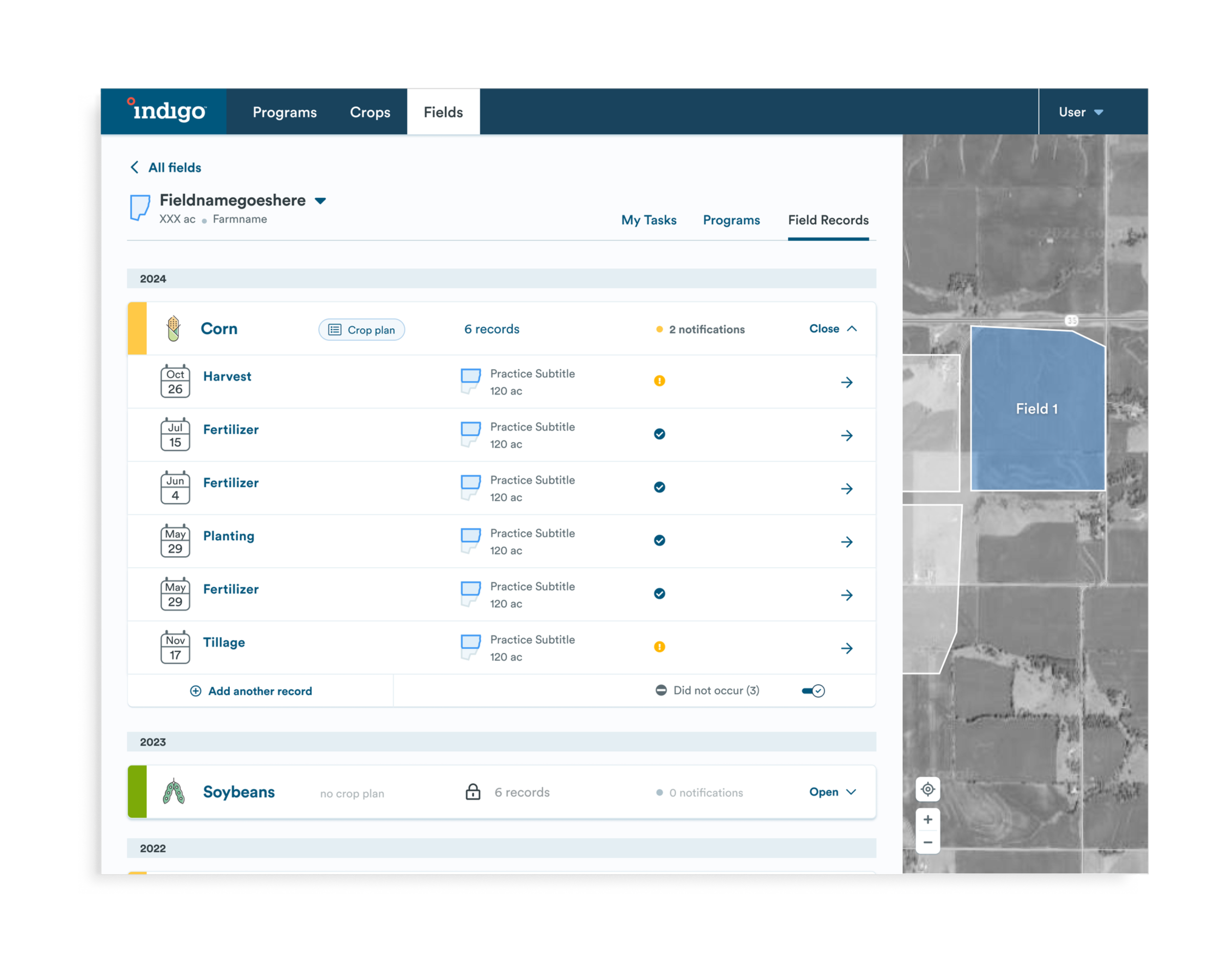
Field level insights and tracking

Simplified field page allowed growers to quick review cropping history and efficiently resolve issues.


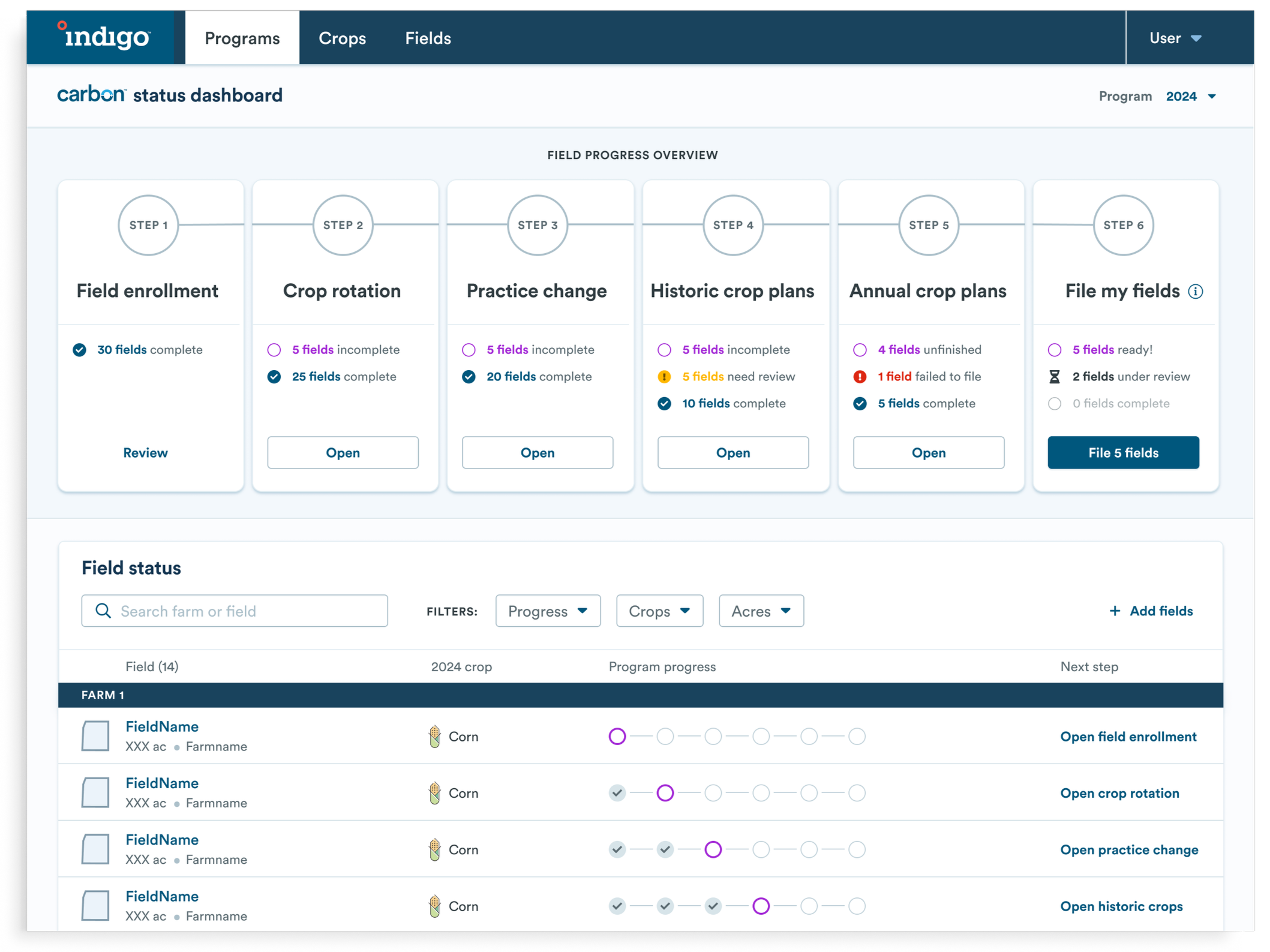
Progress and status visibility

Redesigned dashboard gave growers and partners
a clear view of program filing status at a glance.

05 – IMPACT

~1,000,000

verified carbon credits generated
post-redesign launch

“This is an unbelievable time saver. If there was a most improved award, this team wins it hands down!”

84%

of users rated the filing experience
as easy or very easy

10x

reduction in time required to
complete data collection

|

06 – MY CONTRIBUTION

What I owned

  • Foundational research and synthesis across internal and external stakeholders

  • Crop-oriented system framework and product architecture

  • Crop Plan creation, management, and issue resolution design

  • Engineering handoff and implementation support

  • Strategic reframing and insight development


  • Workflow and interaction design across all major flows


  • Dashboard and navigation redesign


  • Alignment with VPs, directors, and cross-functional leadership