How I helped reframe Indigo's carbon software strategy around trust, seasonal decision-making, and the real stages of practice adoption.
Indigo's carbon business depended on growers adopting genuinely hard new practices. But the product was designed around enrollment and data collection — not the behavioral journey that actually determined whether growers said yes. Across three phases of research, I synthesized qualitative findings from 120+ growers, agronomists, and internal stakeholders into a practical strategic framework for how Indigo's carbon software should be designed.
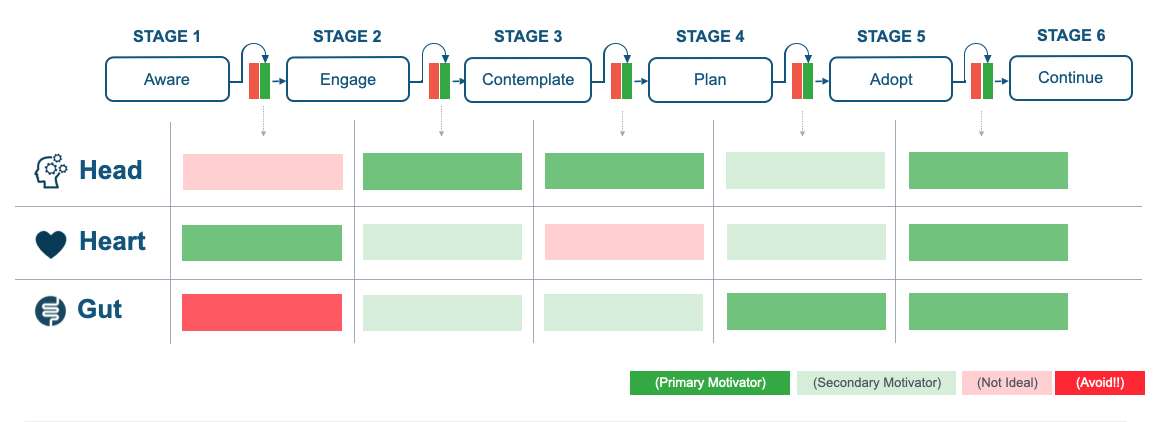
Head / Heart / Gut motivation framework
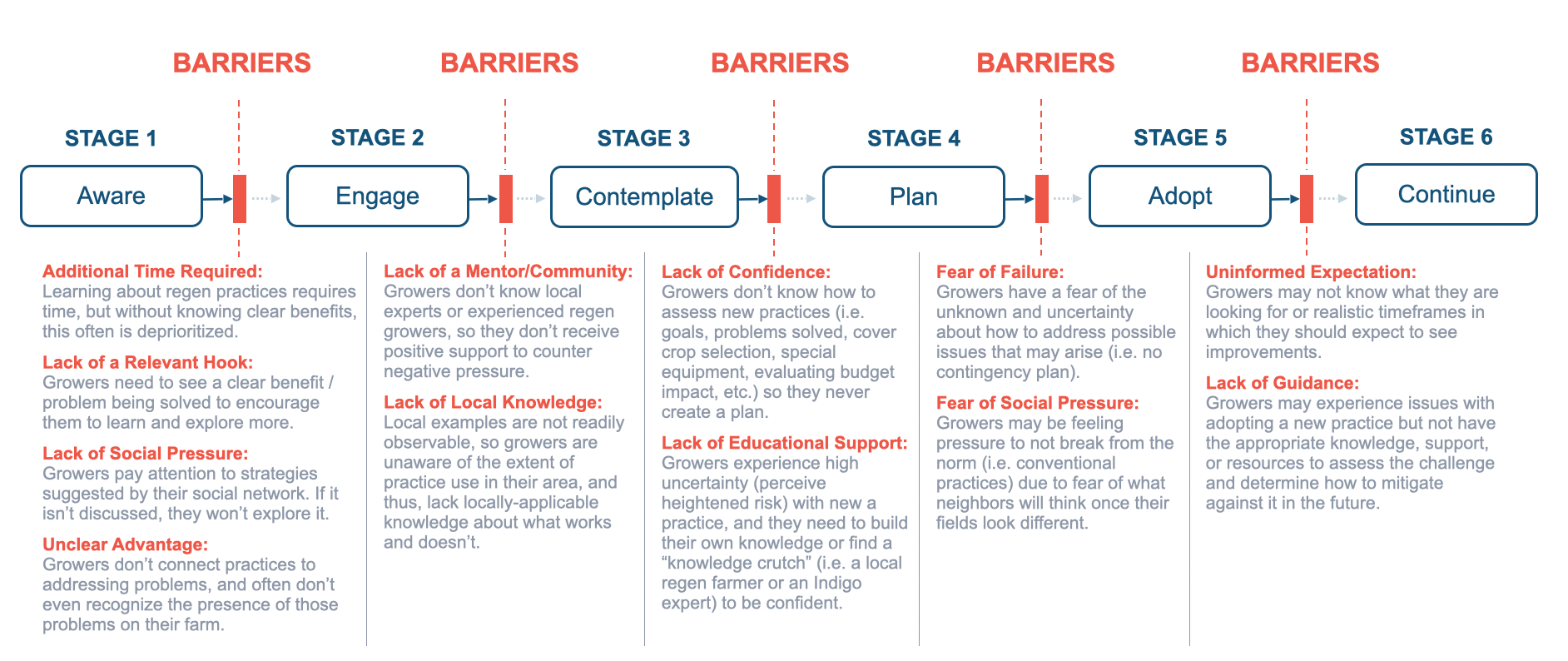
At each adoption stage, growers are driven by different primary motivations. Rational logic, emotional friction and trust, and identity and confidence each dominate at different points — and the same message lands differently depending on where a grower is in their journey.
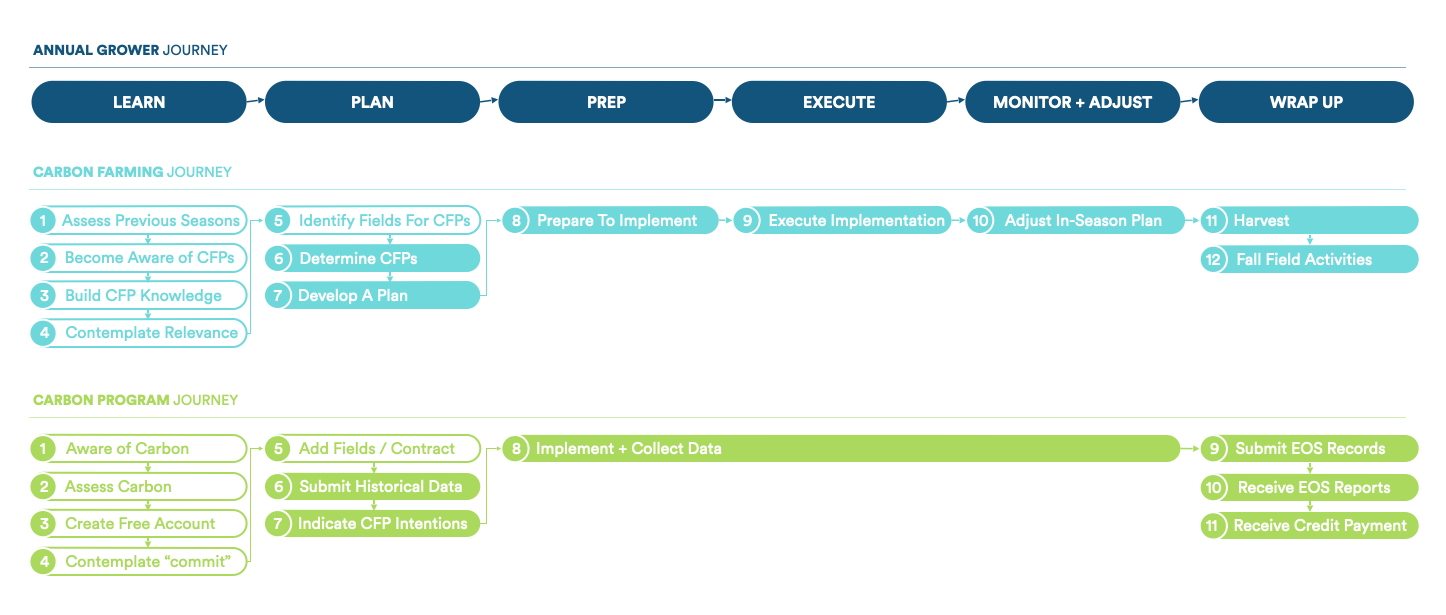
Three interacting journeys
Carbon software had to fit into three layered journeys — the grower's annual farm cycle, the carbon farming journey, and the carbon program journey. Together these defined when growers are open to learning, when they need planning support, and when they need proof of progress.
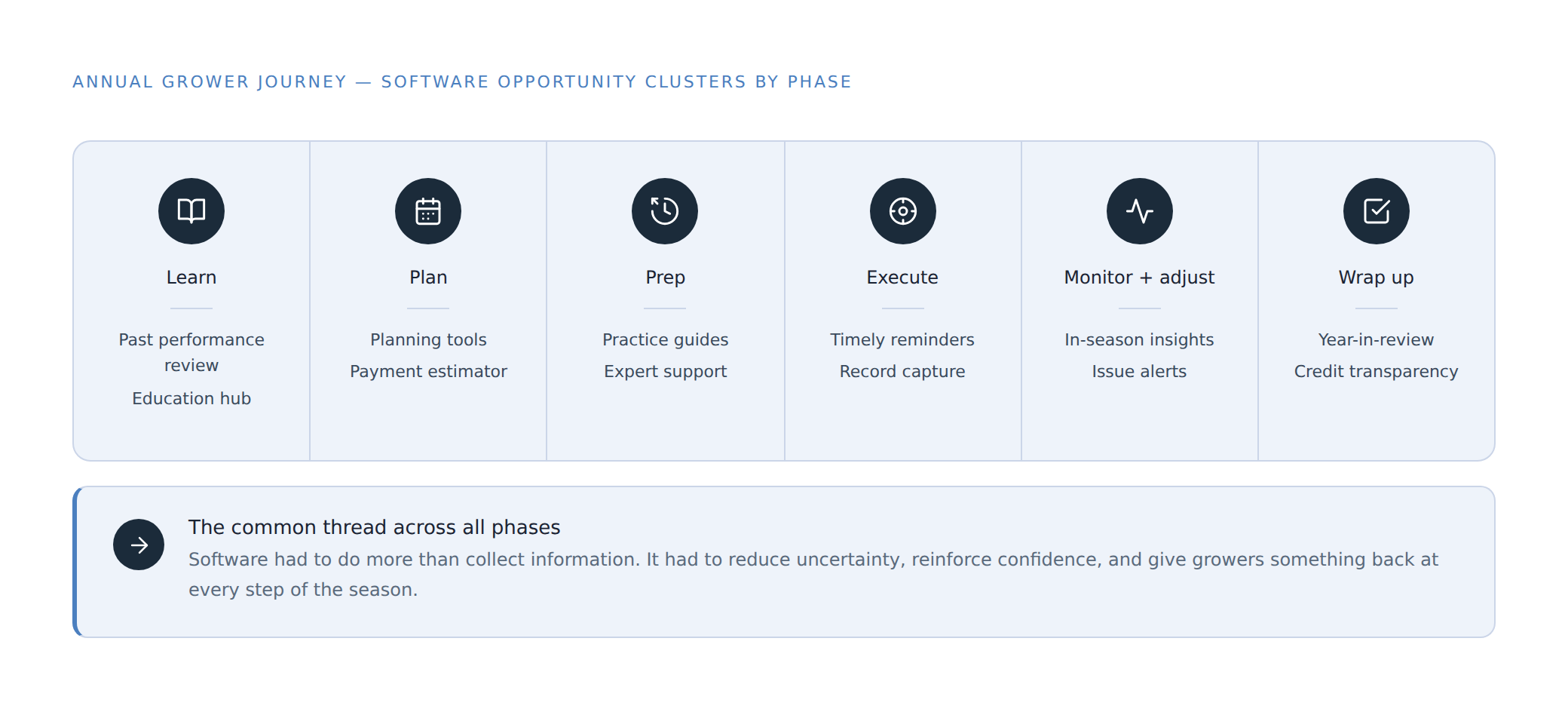
Seasonal software opportunity map
Each phase of the grower's year calls for a different kind of support. This map identified specific software opportunity clusters per phase — a repeatable lens for evaluating product concepts against real grower needs and seasonal timing.
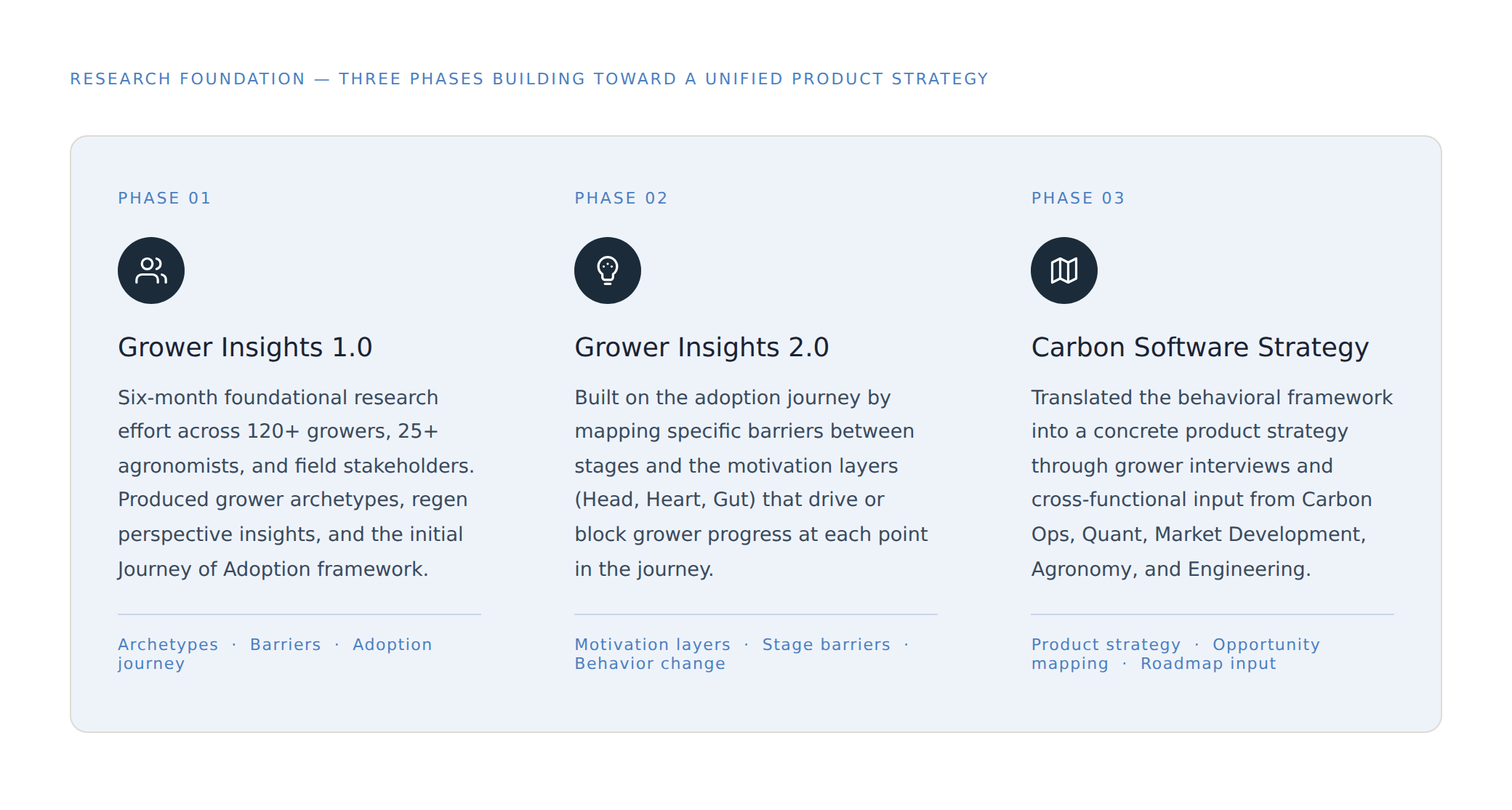
This strategy was grounded in a substantial base of research conducted over roughly a year — synthesizing grower interviews, field ride-alongs, cross-functional internal interviews, and prior Carbon team efforts across Grower Insights 1.0, Grower Insights 2.0, and the Carbon Software Strategy initiative.
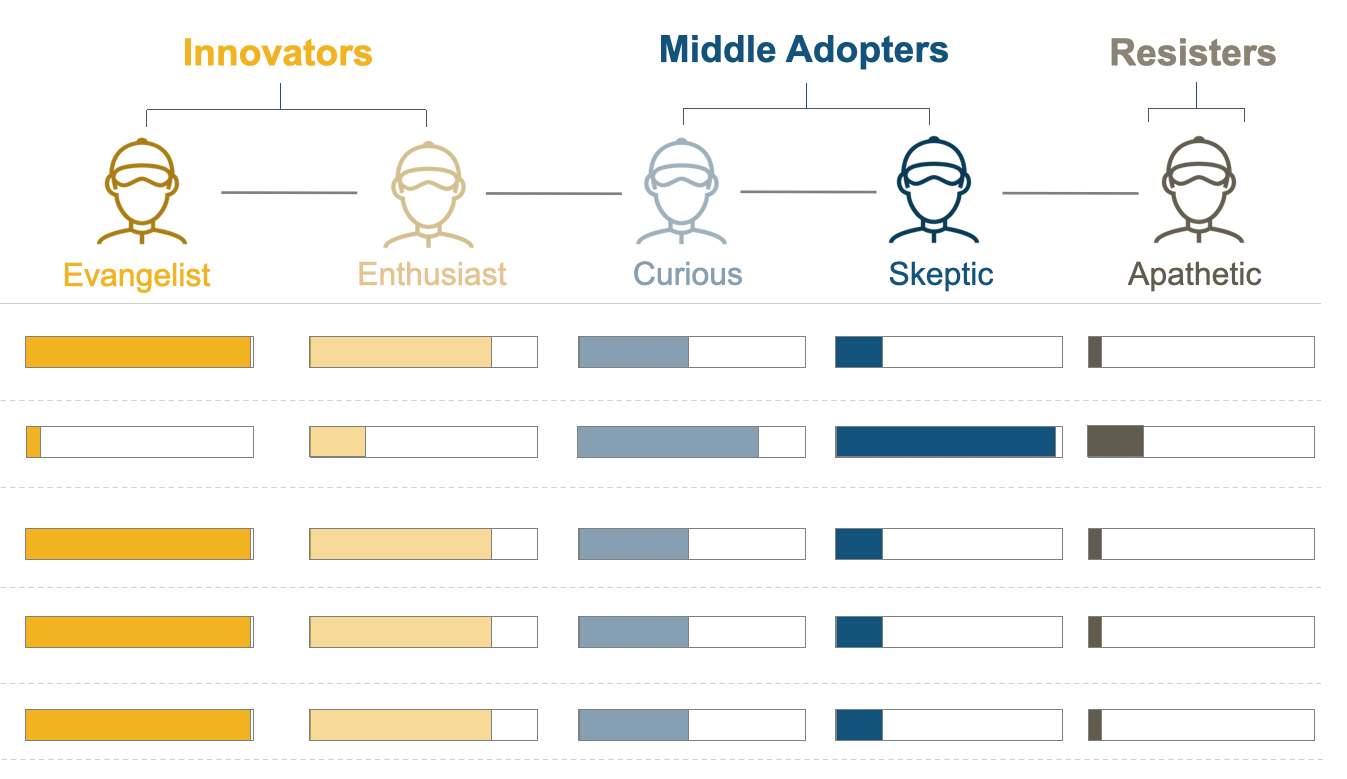
Growers don't adopt new practices because they were shown a feature or offered a payment. They adopt when they have enough trust, relevance, and confidence to believe a new path is both worthwhile and survivable.
That reframed the product question from "how do we get growers through enrollment?" to "what does software need to provide at each stage to help a grower move forward?" At different points, different things matter — early on, emotional friction dominates; later, planning support and confidence matter more than information.
Rather than treating carbon software as a single product for form-filling and record submission, the strategy framed it as a system of supports that had to fit the grower's real annual cycle. The framework mapped six phases — Learn, Plan, Prep, Execute, Monitor, Wrap Up — and layered the Carbon Farming and Carbon Program journeys on top, defining the what and the when of product thinking across the full grower year.