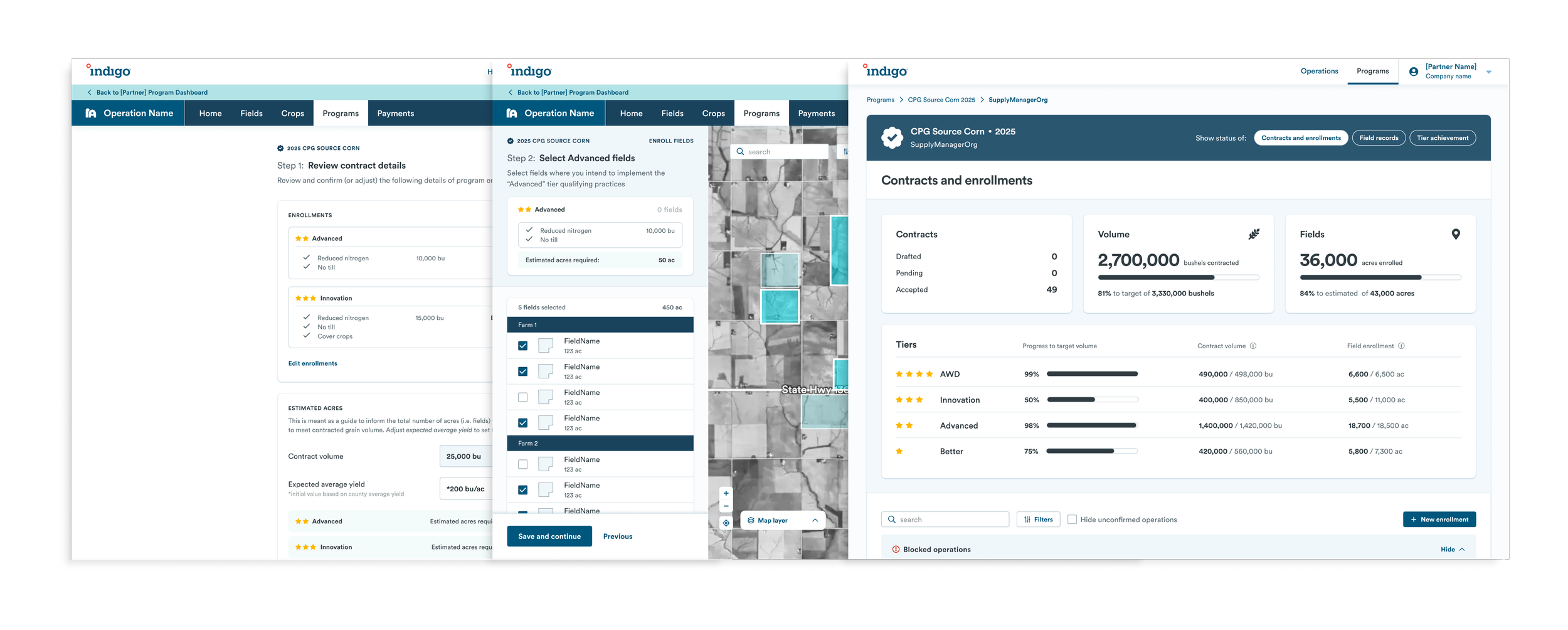
UNIFIED SUSTAINABILITY PLATFORM
Designing the UX Foundation for a Unified Sustainability Platform
How I helped bring Carbon and Source together into one connected product experience by unifying architecture, workflows, and design patterns across a multi-program platform.
Senior Product Designer
Sole designer, initiative
ROLE
CONTEXT
SCOPE
Platform strategy, IA, systems design, patterns
TEAM
PM, engineering, ops, CS, program stakeholders
01 – OVERVIEW
What looked like isolated UX issues was actually a broader platform problem.
Indigo's sustainability platform had grown to support multiple programs and user types, but Carbon and Source had been built as separate product experiences. The result was a platform that felt fragmented: inconsistent architecture, siloed workflows, and no shared foundation for future work.
I helped define a unified platform direction by bringing Carbon and Source into a shared product model, aligning connected workflows across enrollment, field operations, and program execution, and establishing reusable patterns that could scale across the platform over time.
02 – THE CHALLENGE
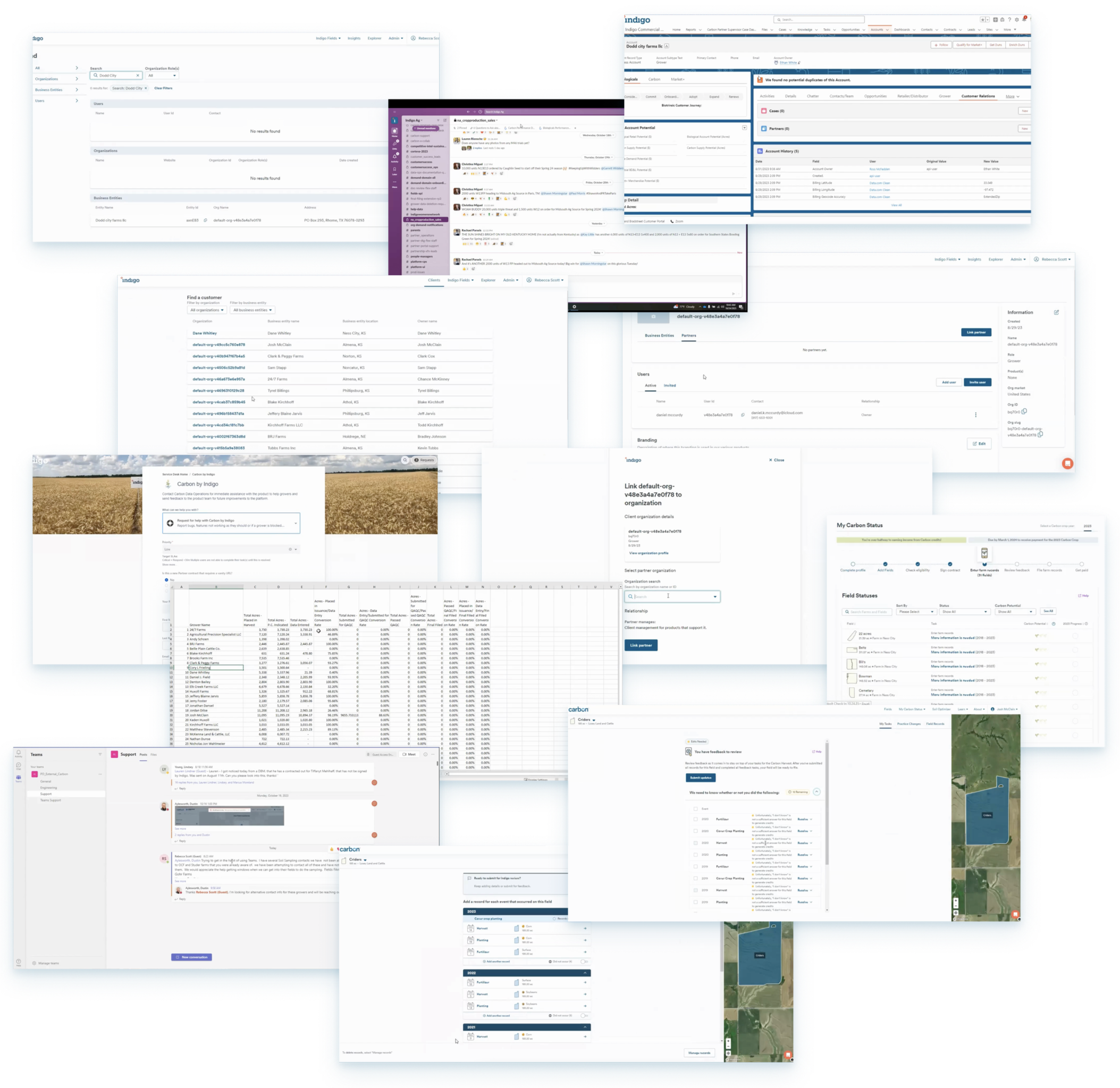
Growers and partners needed to move across programs, but the product didn't support that naturally.
Processes, domains, navigation, terminology, page structure, and interaction patterns shifted depending on where you were in the product and what you were trying to accomplish. Related workflows felt siloed by program rather than connected by purpose.
At the same time, the team had no shared UX foundation. Similar problems were being solved in different ways across product areas, making the platform harder to extend and maintain as new workflows emerged.
03 – THE INSIGHT
The problem wasn't inconsistent screens. It was inconsistent system logic underneath them.
Carbon and Source had grown through separate initiatives without a shared model for how programs, operations, relationships, and oversight should work together. That reframe shifted the work from optimizing isolated flows to defining the shared structure beneath the experience.
04 – THE SOLUTION
I focused on the structural decisions that would create the most leverage across the system.
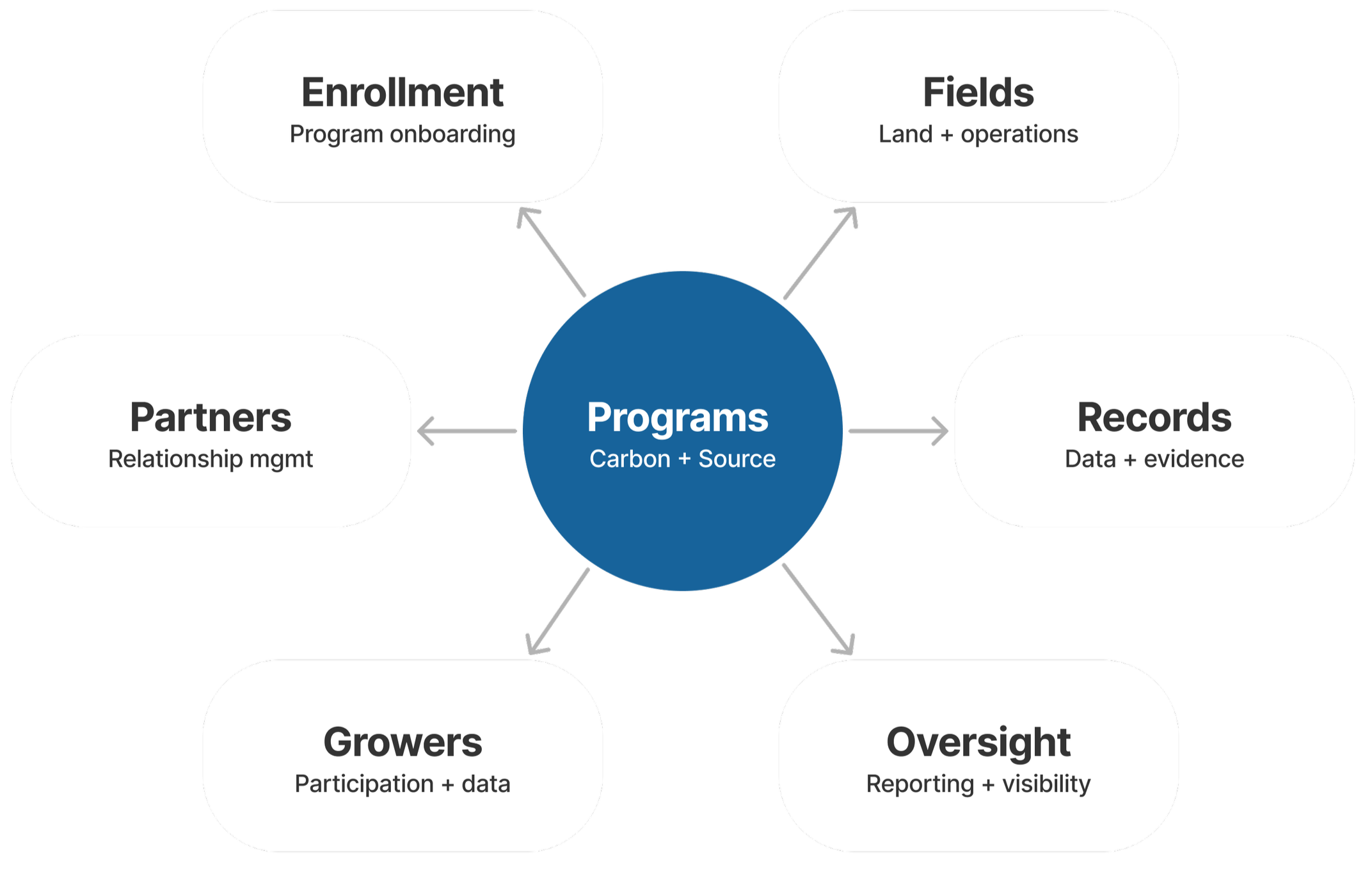
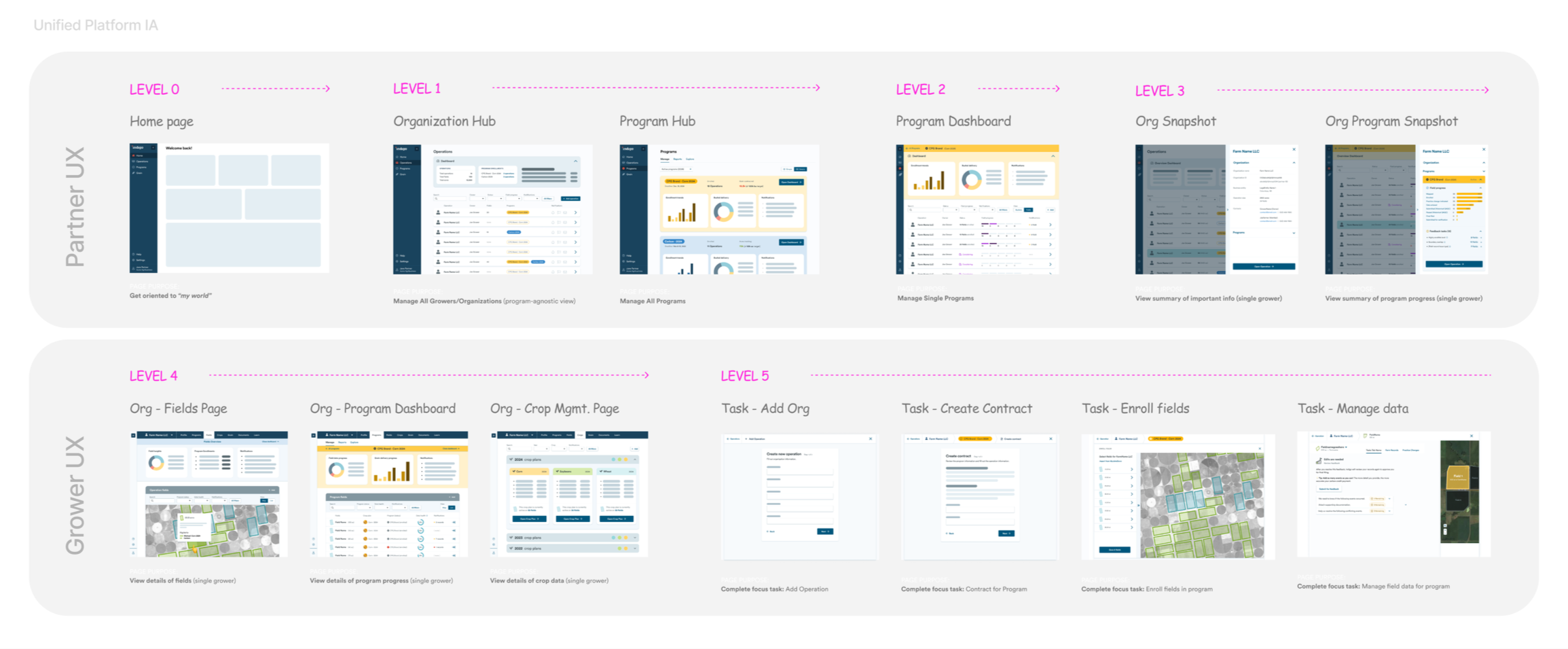
Rather than fixing surface-level inconsistencies one at a time, the work focused on defining the shared structure beneath the experience: unified platform architecture spanning programs, enrollment, partners, growers, and fields.
This meant creating stronger continuity between program and operational workflows, standardizing relationship management and invitation frameworks, improving partner oversight patterns, and establishing reusable page structures and interaction models shared across both programs.
04 – PRODUCT
Key artifacts from the unified platform.
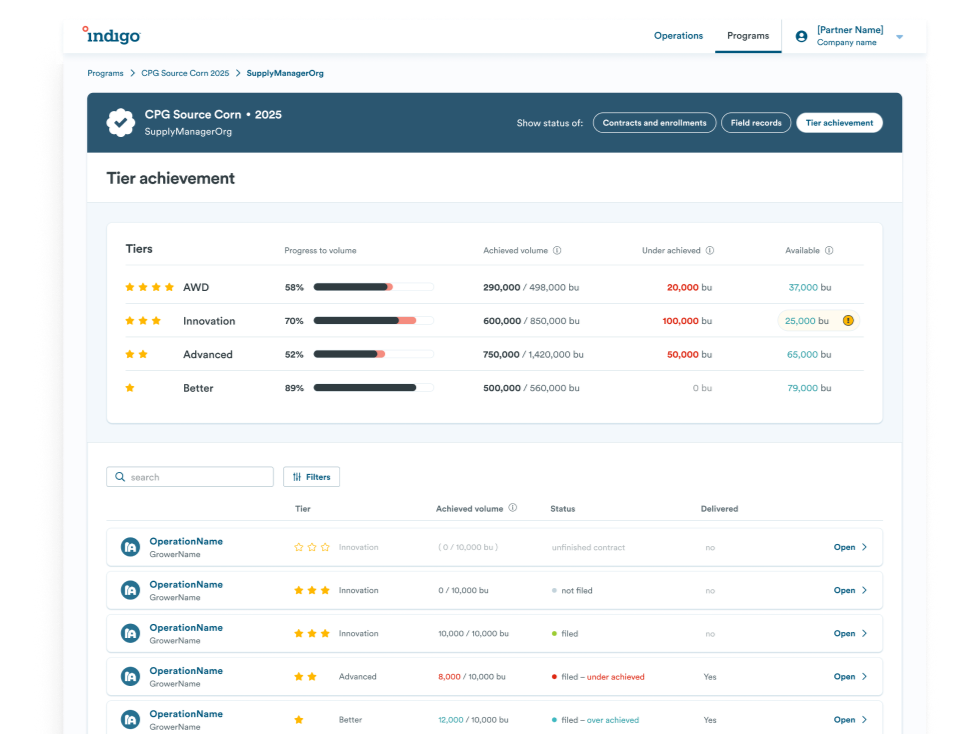
Partner oversight dashboards
Standardized management view giving partners visibility into grower participation across programs.
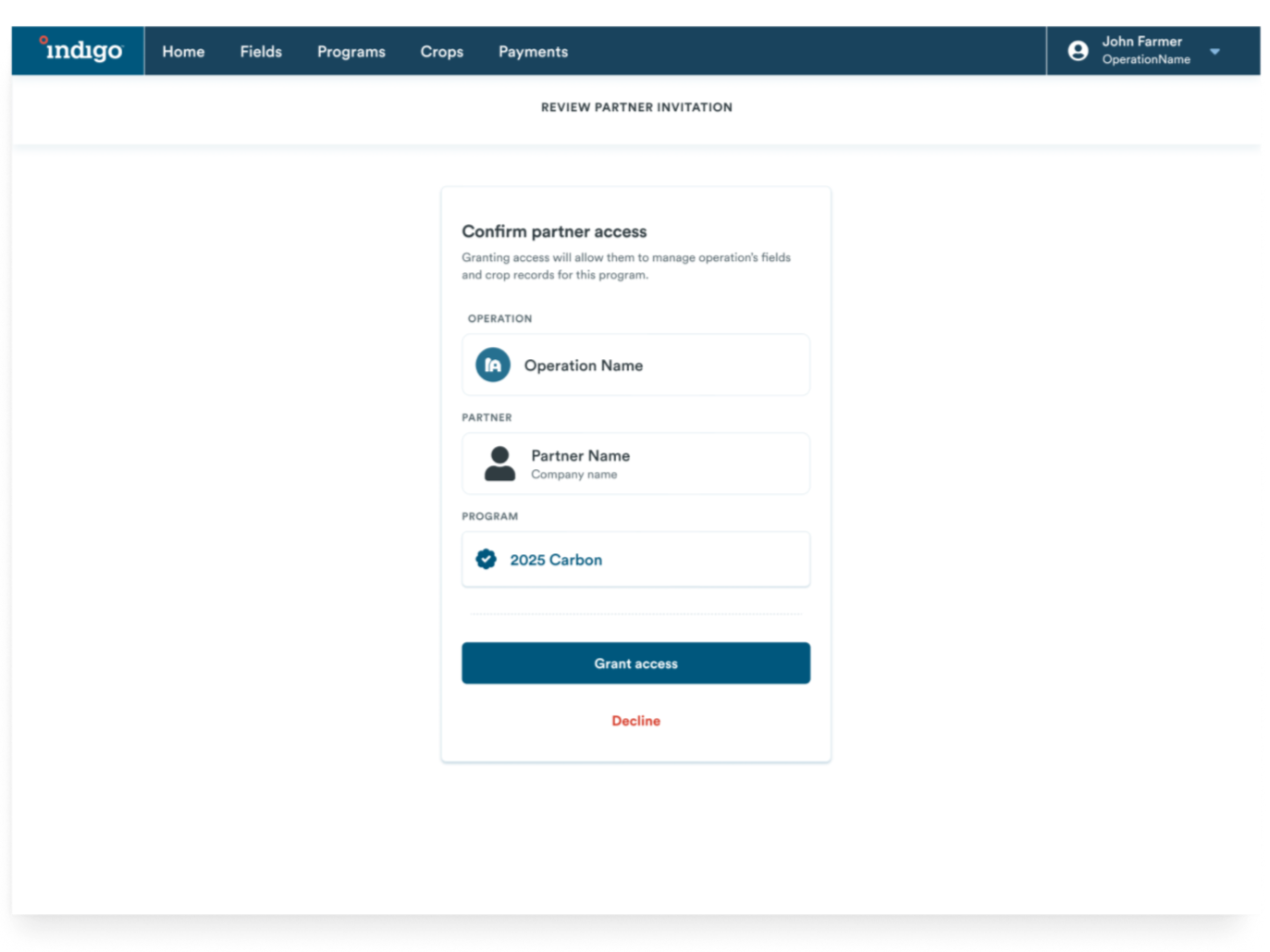
Permission and relationship management
Consolidated and standardized user types into a single unified mgmt. framework built for scale.
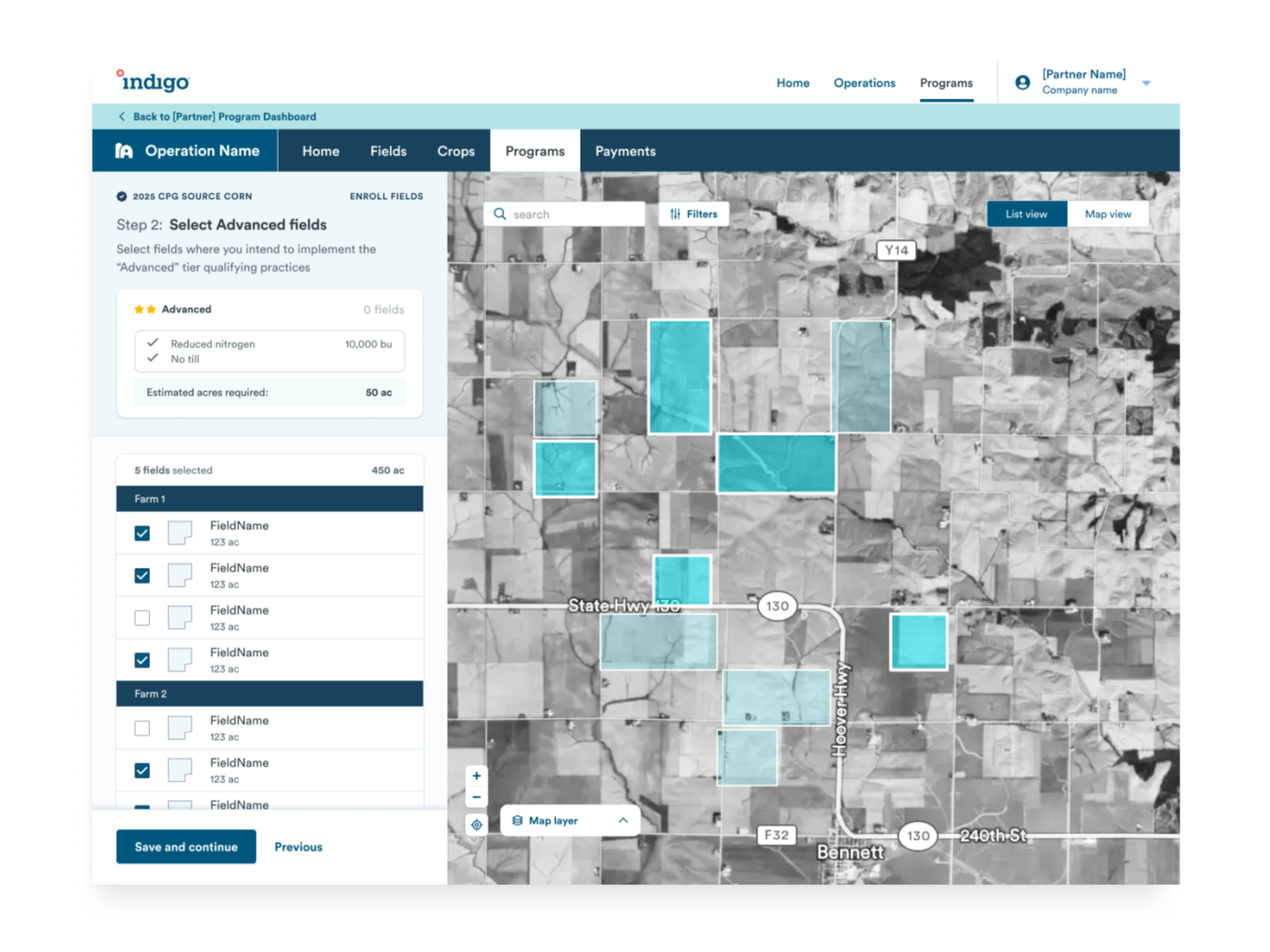
Reusable page structures
Shared layouts and interaction patterns applied consistently across product areas and programs.
05 – IMPACT
This work shifted Indigo's sustainability product from separate program experiences to a connected platform.
Growers and partners gained a more connected experience
Carbon and Source felt like parts of one platform rather than separate products, with clearer architecture and more consistent patterns throughout.
A scalable foundation for what came next
The unified architecture became the platform subsequent work, including the biofuels compliance platform, was built on top of.
The team gained reusable foundations for future work
Shared patterns and architecture reduced duplication and created a more consistent starting point for new workflows and product areas.
Strategic design influence at the platform level
Alignment with VPs and directors on platform direction, establishing shared principles that guided product decisions across programs.
06 – MY CONTRIBUTION
What I owned
Reframing fragmented UX issues as a broader platform challenge
Connecting program, operational, and management workflows
Improving partner oversight and grower management patterns
Supporting implementation across evolving workstreams
Defining unified platform and information architecture
Standardizing relationship management and invitation frameworks
Establishing reusable page structures and interaction models
Alignment with VPs and cross-functional leadership on platform direction